


A reindeer and sleigh can look like one Christmas moment—or like two decorations that happened to land in the same yard. The difference is usually visual direction. Decide where the scene is going, choose the place from which it should be understood, and leave enough open space for both silhouettes to read. With those choices made first, you can create a departure, arrival, or welcome scene without relying on a fixed layout formula.
Decide What Story the Reindeer and Sleigh Should Tell
Start with a verb, not a position. Is the scene leaving, arriving, or welcoming?

That single choice gives every visual decision a purpose. In a departure scene, the eye should move away from the house or toward an open edge of the composition. In an arrival scene, it should move toward the entry or another quiet feature of the home. In a welcome scene, the group should present itself to the main viewing area rather than suggesting fast movement across the yard.
You do not need props or signs to explain the story. Direction, shape, and open space can do the work. The goal is not to make the arrangement theatrical. It is to make the relationship between the reindeer and sleigh immediately understandable.
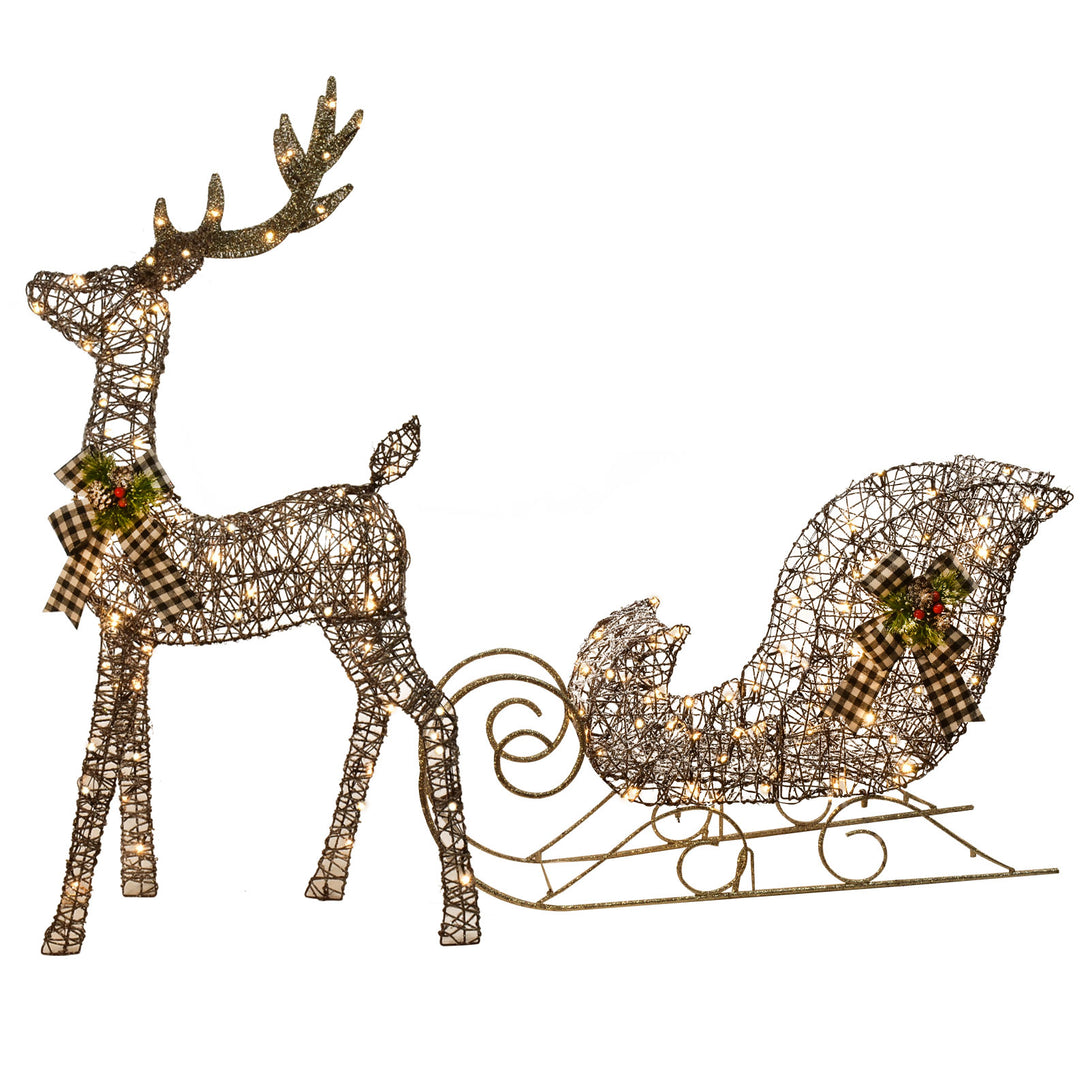
Before planning around any product, look at its real posture. A figure that already turns, lifts its head, or presents a strong side profile will create a different line than one with a more front-facing silhouette. Work with the posture you can see; do not plan as if the figure can be changed into a pose it does not have.
Choose One Main Viewing Direction
Most yards can be seen from several places, but a small display rarely tells its story equally well from every angle. Choose one primary view: the curb, driveway approach, or route toward the front door.
Stand there in daylight and frame the scene with your phone. Notice which side of the image feels open and where the house creates a natural destination. That view becomes your composition. Other angles can still look pleasant, but they do not all need to explain the scene with the same clarity.
This decision prevents a common visual conflict: the reindeer appears to move one way, the sleigh reads on another line, and the doorway pulls attention somewhere else. When you optimize for one view first, those elements can support a single direction.
If you are coordinating the entire front yard rather than this pair alone, use the one-weekend front-yard Christmas plan after you establish the reindeer-and-sleigh story.
Point the Scene Along One Visual Flow
“Visual flow” simply means the direction your eyes naturally travel through the picture. A reindeer-and-sleigh scene becomes easier to read when the major shapes sit on that same path.
Begin with the reindeer silhouette. Its body and visible orientation usually suggest a forward direction. Let the sleigh continue that line rather than creating an unrelated second axis. The two pieces do not have to form a perfectly straight row. A gentle diagonal can feel more natural, as long as the eye moves from one element to the next without doubling back.
Now check the background. A bright doorway, strong window outline, decorated shrub, or another large figure can redirect the eye. Decide whether that feature is the destination of your story or a distraction. If it is a distraction, simplify the area around it or choose a different view.
The arrangement should answer this question in one glance: Where is the scene going—or has it stopped to greet me? If the answer is unclear, adjust the angle of the whole grouping before adding more decor.
Use Negative Space to Keep the Pair Readable
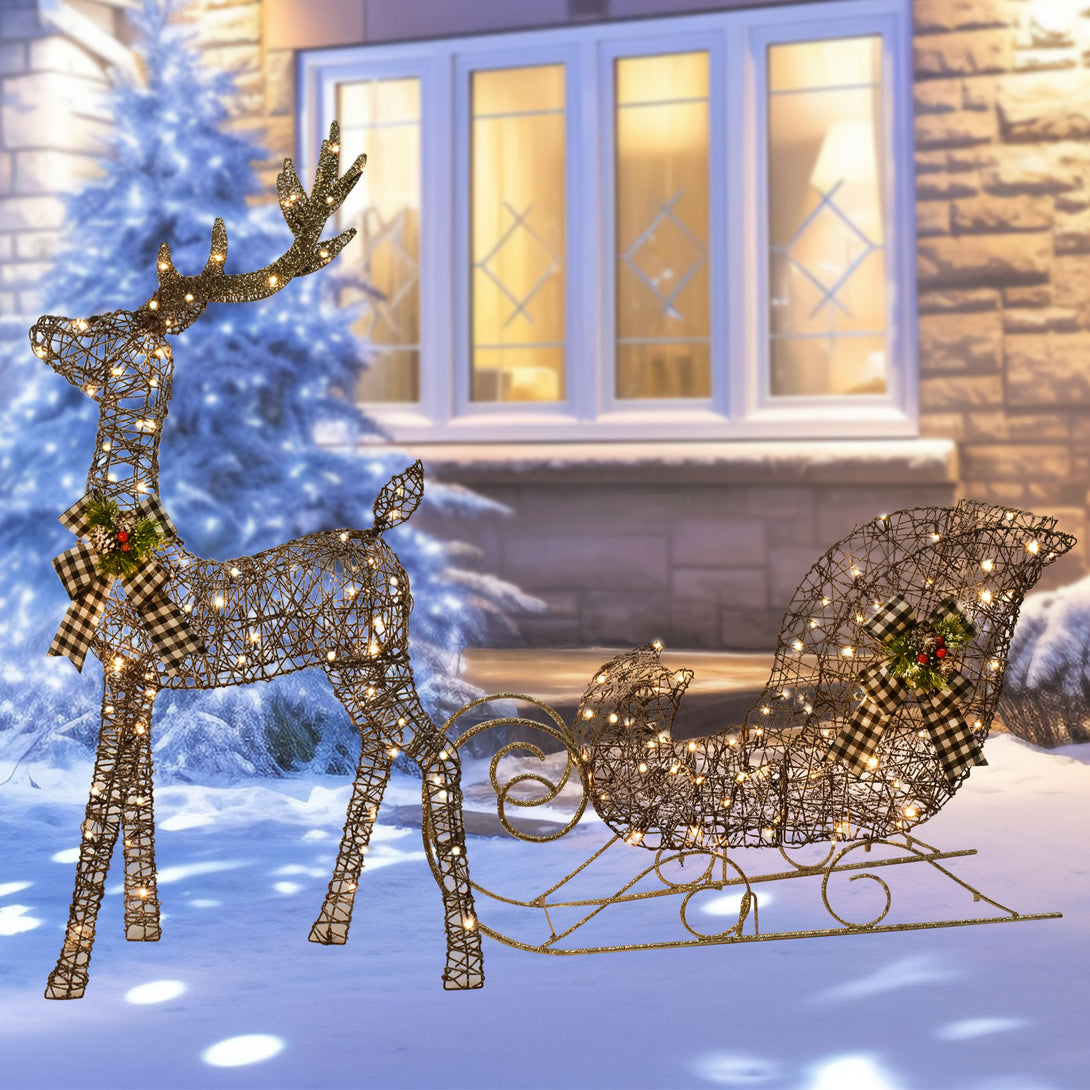
“Negative space” is the open area that lets the main shapes stay distinct. It is not wasted yard. It is what allows the viewer to recognize a reindeer and a sleigh instead of seeing one crowded block of light and decoration.
Look for three kinds of breathing room:
- Silhouette space: enough visible separation for the outline of the reindeer and the outline of the sleigh to remain identifiable
- Directional space: an open area in front of the scene that gives the visual story somewhere to go
- Background space: a quieter zone behind the pair so another strong shape does not appear to merge with them
There is no universal spacing number. The amount of open area you need changes with the figures’ real silhouettes, the viewing angle, the background, and the final crop of the scene from the street or entry.
Use the “squint test.” From the main viewpoint, narrow your eyes until small details disappear. If the group still reads as a reindeer leading into a sleigh, the major shapes are doing their job. If everything becomes one bright mass, create more visual separation or turn the grouping so the outlines overlap less.
Build the Background Without Starting a Second Story
The background should tell the viewer where the scene is happening, not compete to become another main event.
For an arrival story, the home’s entry can act as the destination. Keep the route from the reindeer toward that destination visually simple. For a departure story, an open stretch of darker lawn or a quiet edge of the frame can make the outward direction feel intentional. For a welcome story, a restrained doorway or porch backdrop can help the pair feel connected to the home.
Repeat rather than multiply. If the reindeer and sleigh already establish the main scene, a familiar color or a small echo of light in the background can connect them to the house. Adding several unrelated large figures may break the flow into competing episodes.
For broader inspiration after this composition is settled, see holiday inspiration for outdoor reindeer decorations. Keep this page’s task narrow: make the reindeer-and-sleigh relationship clear first.
Try Three Flexible Reindeer-and-Sleigh Stories
These are visual frameworks, not product-specific placement diagrams. Adapt each one to the actual posture and shape of your set.
1. The Departure Scene
Choose an open side of the composition as the destination. Turn the grouping so the reindeer’s visible direction leads toward that opening, with the sleigh continuing the same visual path behind it. Preserve open space ahead of the reindeer so the story feels as though it can continue beyond the frame.
Keep the house and larger background features quieter on the opposite side. This contrast makes the scene feel like it is moving away from a starting point instead of floating in the middle of the yard.
2. The Arrival Scene
Use the doorway, a softly framed porch, or another calm architectural feature as the destination. Angle the group so the eye moves from the sleigh through the reindeer and toward that feature. The destination should be visible without becoming a second oversized centerpiece.
Leave a clear visual path between the group and the house. Too many bright accents in that path can make the “arrival” feel interrupted. The story works when the eye reaches the entry without being pulled sideways.
3. The Welcome Focal Point
When you want the display to greet people rather than suggest travel, orient the group toward the primary viewing area as much as the product’s real posture allows. The reindeer and sleigh should read as one presented arrangement, with neither piece hidden behind the other.
Use a compact visual arc or shallow diagonal instead of a long travel line. Keep open space around the outside of the group so it feels intentionally framed. This creates a composed welcome moment while keeping attention on the home's main view.

Check the Story in Daylight and After Dark
Daylight reveals posture, outlines, and the relationship to the house. After dark, illuminated edges may become more prominent while some background details disappear. Review the arrangement at both times from the same primary viewpoint.
Take one photo in each condition and reduce each image to thumbnail size. Can you still tell which direction the reindeer-and-sleigh scene moves? Can you distinguish the two main silhouettes? Does the same background feature support the story in both views?
If the night view loses the sleigh behind the reindeer, adjust the overall angle to separate their outlines. If the daylight view feels disconnected, bring the pieces into a clearer shared line without erasing the open space between them. Judge the picture you actually see, not a fixed distance borrowed from another yard.
Explore HOYECHI Reindeer-and-Sleigh Options
Once you have chosen a story and viewing direction, browse HOYECHI Outdoor Christmas Decorations or the HOYECHI Christmas Reindeer collection. Evaluate each product by its current visible posture and how that shape could support your chosen story.
For one current visual example, view the gallery for the HOYECHI lighted rattan reindeer and sleigh. Confirm the live product page before making a purchase decision; this article does not provide a product review or specifications.
FAQ
Which direction should an outdoor reindeer and sleigh display face?
Face the grouping along the story you choose and judge it from one primary viewpoint. Point it toward open space for departure, toward a quiet home feature for arrival, or toward the viewing area for a welcome scene—within the product’s real posture.
Should the sleigh sit directly behind the reindeer?
Not by a universal rule. Visually, the sleigh should continue the same flow while keeping a recognizable outline. Its exact relationship must respect the product as supplied; this article only addresses how the shapes read in the finished composition.
How do I keep a reindeer-and-sleigh scene from looking disconnected?
Give both elements one story direction, view them from the same main angle, and use a shared diagonal or arc. If the eye has to jump sideways or reverse direction between the pieces, simplify the arrangement.
What background works with a reindeer and sleigh display?
Choose a background that supports the story without introducing another large focal point. An entry can become an arrival destination, while a quieter edge of the yard can reinforce departure. Preserve enough open area for the silhouettes to remain clear.
Can a reindeer and sleigh be the only main decoration in the yard?
Yes, as a visual composition. The pair already contains a character, an object, and a direction, so it can carry a simple story without another large centerpiece. Background accents should remain secondary if you want that story to stay clear.
Let One Direction Tell the Story
A clear reindeer-and-sleigh display begins with one verb and one main view. Choose departure, arrival, or welcome; let the figures share that visual flow; then protect the open space that keeps both silhouettes readable. When you are ready to match a real product posture to your plan, browse HOYECHI Outdoor Christmas Decorations and judge each option by the story it can honestly show.


