


Before adding a ribbon or ornament to a light-up Christmas wreath, look at the design you chose. Can you still recognise the ring and its opening in the version you are planning, or has the extra decoration become a panel across the middle? That comparison is more useful than trying to make the opening as large as possible.
The aim is to preserve the shape you enjoy. Some wreaths deliberately place a built-in bow or its tails partly inside the ring. That can be a complete design worth leaving alone. Here, the decision concerns optional additions—not removing original parts to create a perfectly empty circle.
Separate the original design from something you plan to add
Use the exact product’s intended appearance as your starting point. A factory bow entering the opening is different from compressed foliage, and both are different from an extra ornament you are considering. If the greenery still needs its permitted preparation after unpacking, use the guide to fluffing an artificial Christmas wreath first; do not treat that preparation as a reason to cut branches, move lights or strip off original decoration.
Once the original design is properly presented, look at it on its own. Notice where the ring turns around the center and which details already attract attention. If the built-in decoration gives you the focal point you wanted, an additional ornament needs a clear purpose. No addition is a finished choice, not an unfinished project.
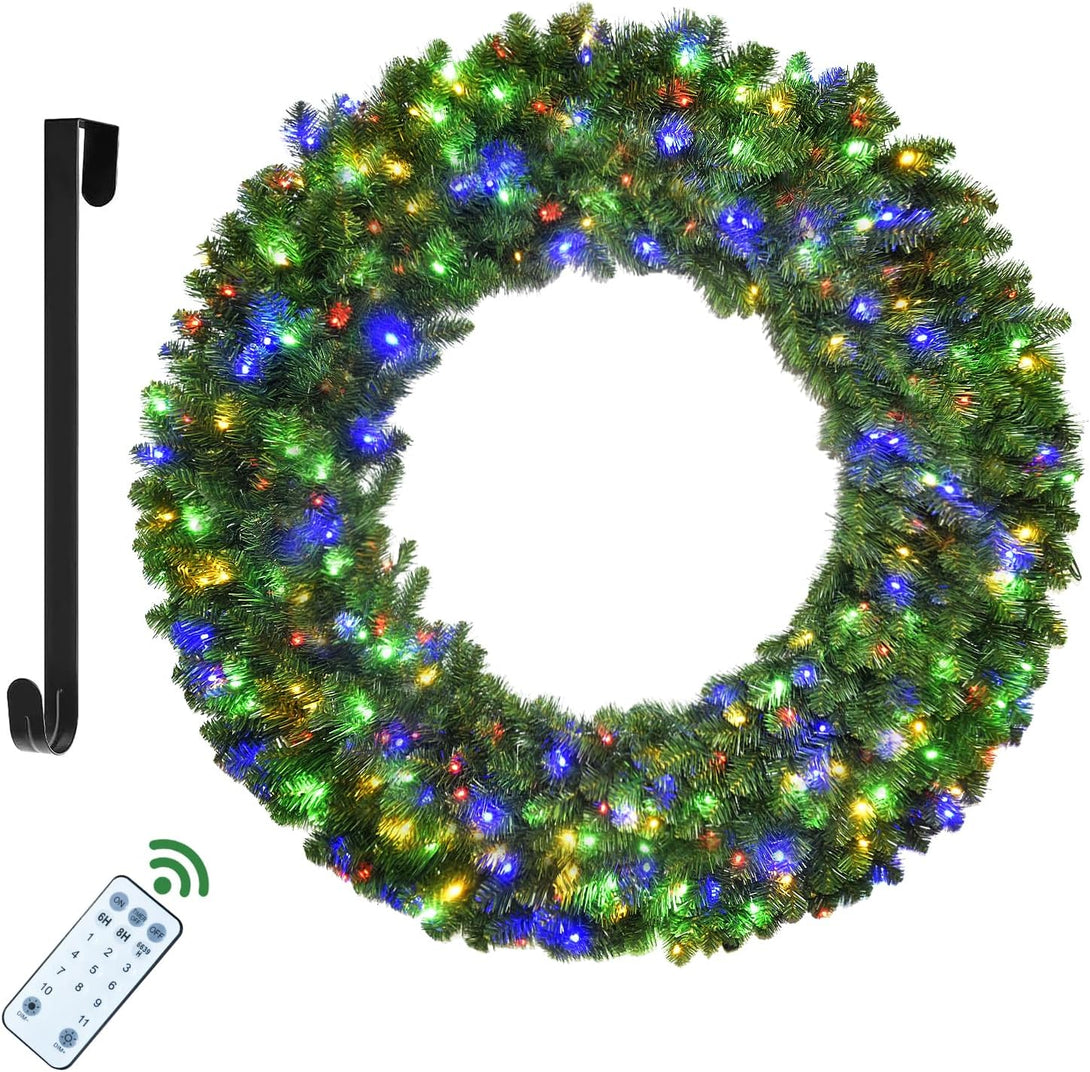
Compare one proposed detail with the unchanged wreath
Make a simple planning sketch on a photo of the original wreath. Keep an unchanged copy beside it, then draw just one proposed ribbon or ornament. Follow its outline: does it sit mainly along the ring, or stretch from one side of the opening toward the other? A small-looking item can still cross an important part of the view if it has long tails or hanging strands.
Look from the position where you expect to enjoy the display, not only at a close-up of the ornament. The space through the middle includes whatever is behind the wreath. A window frame, door panel or dark background can change how clearly you see the proposed detail. Compare the whole view before deciding that an unused patch must be filled.
If you already have the wreath, include its intended lit appearance as well as its unlit appearance. Ask whether you can still follow the ring once the lights draw your eye, and whether the added detail remains the accent you wanted. This is a visual preference, not a test of light output; a sketch cannot establish how an ornament will fit or attach.
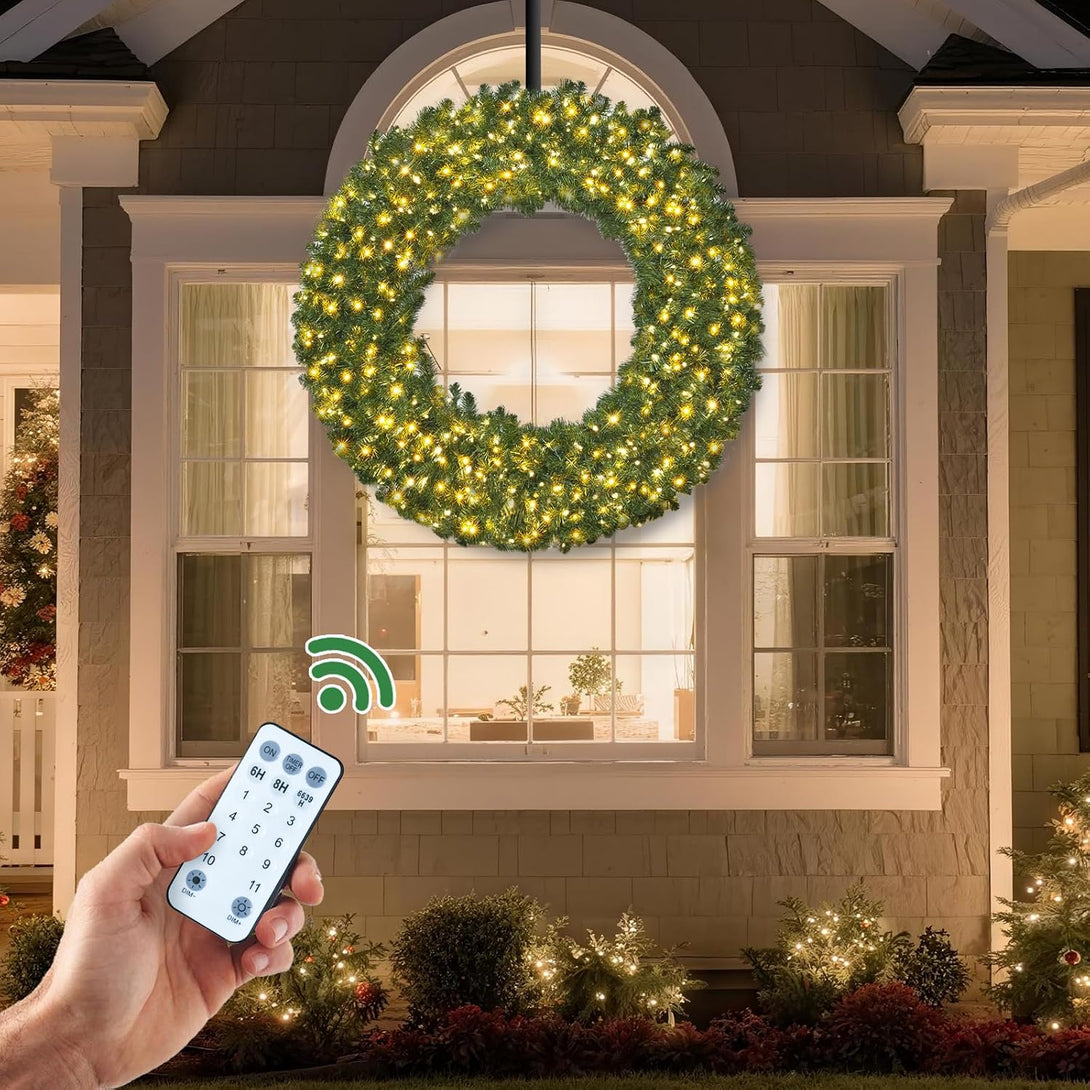
Keep an addition when it contributes a clear accent
A useful addition gives the wreath something specific you want—a colour detail or a personal motif—while leaving the ring easy to recognise. It does not have to disappear into the greenery, and it may overlap part of the opening. The question is whether that overlap still produces the composition you prefer when compared with the original.
Hypothetical example: you sketch one red ornament beside the lower side of a plain green ring. In the full view, it creates a distinct colour accent, while the central space still reads as an opening. You prefer this to the unchanged version, so you keep that one proposed detail in the plan. You do not add matching pieces around the rest merely because space remains.
Omit an optional piece when it turns the opening into a screen
Several proposed drops, long ribbon tails or a broad ornament may create a band across the center. If you chose the wreath for its open ring, compare a version without that optional crossing element. Do not try to recover the opening by pulling the original frame wider or removing factory details. Edit the addition in the plan, not the wreath’s construction.
Hypothetical example: a sketch places several hanging ornaments across the opening. Viewed together, their outlines form a curtain, and the greenery reads more like a border around them. Comparing the original with the same plan minus those hanging pieces shows that you prefer the open ring. The result is to omit the proposed group, rather than replace it with a smaller curtain of decorations.
A fuller, ornament-led composition is not automatically poor quality. It is simply a different preference. Choose deliberately between that look and the readable opening you originally wanted; do not mistake a fuller shopping list for a better result.
Give a cherished ornament its own place in the plan
Sometimes the extra ornament matters more to you than the idea of putting it on this wreath. Perhaps its broad silhouette or long hanging shape is precisely what you love. If the sketch only works after hiding most of that character, leave the wreath as it is and plan the ornament in another separately suitable setting.
That is different from discarding the ornament or altering it to fit. You preserve both designs: the wreath remains an open ring, and the personal decoration can be considered as its own accent. Make a separate visual plan for that setting and check its suitability before using it. There is no need to force two favourite objects into the same center.
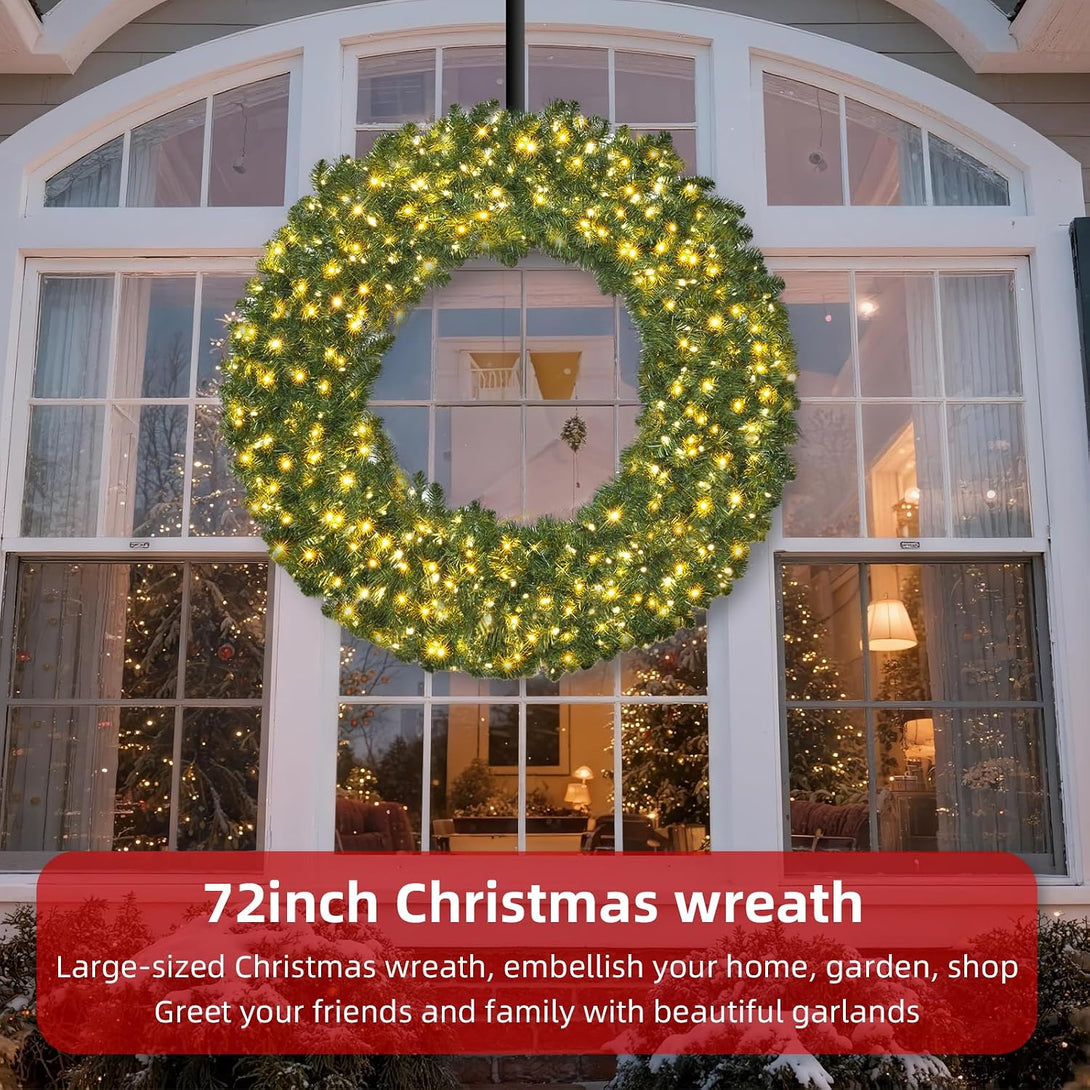
Choose the wreath you like before planning accessories
The 72-inch lighted wreath listing is the oversized 72-inch HYC705-72 appearance example illustrated here. Its description allows personalisation with ribbon, bows or ornaments. That supports considering an optional detail; it does not establish a fastening method or compatibility for a particular accessory. The gallery scenes are product illustrations, not ornament trials or a size recommendation for an ordinary door.
If you prefer a complete bow-led design, choose that character rather than buying it with the intention of dismantling its original focal point. If you prefer a plainer ring, compare designs in the Christmas tree, wreath and garland collection. For the separate question of dimensions and available space, use the guide to how Christmas wreaths are measured. A larger-looking center alone tells you neither which size fits nor which wreath is better made.
Three choices for an optional addition
| What the comparison shows | Decision | What stays unchanged |
|---|---|---|
| One proposed detail adds the accent you want and the ring remains readable. | Keep that detail in the visual plan; stop before adding more by habit. | The original wreath design and construction. |
| An optional crossing shape hides the opening you wanted to enjoy. | Omit that element and compare again with the original. | Factory decoration, branches, frame and lights. |
| A treasured ornament loses its character when squeezed into the wreath. | Plan it elsewhere in a separately suitable setting. | Both the wreath and the ornament remain intact. |
Questions about the center opening
Must the middle of a Christmas wreath be completely empty?
No. Original bow tails or other integrated details may deliberately enter it. Preserve the intended design you like; judge only whether a new, optional addition improves that composition.
Does a bigger opening mean a better wreath?
No. Fullness and opening visibility are different preferences. The visible gap alone does not establish quality, light output or the correct dimensions for your space.
Should I move a built-in bow to make room?
Do not treat this styling comparison as an instruction to move factory parts. Leave the integrated design intact. If it already supplies the focal point, skip the extra ornament or choose a different design before purchase.
When is adding nothing the best choice?
When the original already gives you the desired look, or when the proposed extra detail hides the shape you prefer. Compare the unchanged version first; you may already have the complete display.
Keep the original wreath as your reference, give each optional detail a reason to be there, and compare the whole result. A chosen accent, an omitted addition and a cherished ornament planned elsewhere are all useful outcomes.


