


An outdoor reindeer display can look distinct up close and disappear into the shapes of a house when you step back to the street-side view. The fix is not automatically more decoration. It is a clearer outline, a quieter background, and an angle that works with the figures you actually have. Use this long-view check to find what is merging, competing, or pointing the wrong way—without relying on a set viewing distance.
Choose One Real Street-Side Viewing Frame
Start where the display is normally seen from outside the property. Depending on the home, that may be the usual curbside approach, the end of a driveway, or another everyday view toward the front of the house. Choose one position as the diagnostic frame. You are not setting a required distance; you are choosing the view that matters in real life.
Hold your phone horizontally or vertically, whichever better matches the display area, and keep the whole reindeer arrangement inside the frame. Include enough of the house and landscaping to see what surrounds it. A close crop can hide the exact background conflicts you need to find.
Use this same frame throughout the check. If you move left, right, or closer after every adjustment, you will be comparing different compositions. A consistent view makes it easier to tell whether a change actually improved recognition.
Read the Reindeer as One Simple Silhouette First
Before looking at bows, surface details, or individual points of light, reduce the display to its largest shapes. Ask what the outer edge looks like from your chosen frame.
With a single figure, check whether the head, back, body, and legs combine into a recognizable reindeer outline. With several figures, first ask whether the group reads as reindeer at all, then look for the boundary of each figure. The goal is not to assign family roles or create a character story. It is to make the subject recognizable before the viewer has to study the details.
Try a quick two-second check: look away, return to the street-side frame, and name the first shape you recognize. If you see “a dense cluster,” “part of the porch,” or “several vertical lines” before you see reindeer, the large outline needs attention.
Do not add visual detail before the silhouette itself is readable. Additional decorative elements cannot separate shapes that occupy the same line of sight.
Find Where the Outline Merges With the Background
Now trace the reindeer outline against what sits behind it. Common visual interruptions include window frames crossing the body, porch posts lining up with legs, tree trunks cutting through the neck, shrubs filling the space under the body, and fence lines touching the back.
Make a short list of the two or three strongest collisions in your actual view. Be specific: “the antlers meet the roofline” is more useful than “the background feels busy.” You are looking for edges that continue through the figure or erase part of its shape.
Correct the easiest collision first. A small change to the viewing angle of the whole display may move the antlers away from a roof edge or place the legs against a calmer patch of background. If the product's supplied form does not allow that relationship to improve, consider a different location within the same display area rather than pretending a body part can move.
Background contrast here means how clearly the shape edge differs from what sits behind it. A pale figure can still disappear against a detailed background, while a complex figure can remain recognizable when its outer edge sits against a visually quiet area.
Use the Product's Real Facing Direction
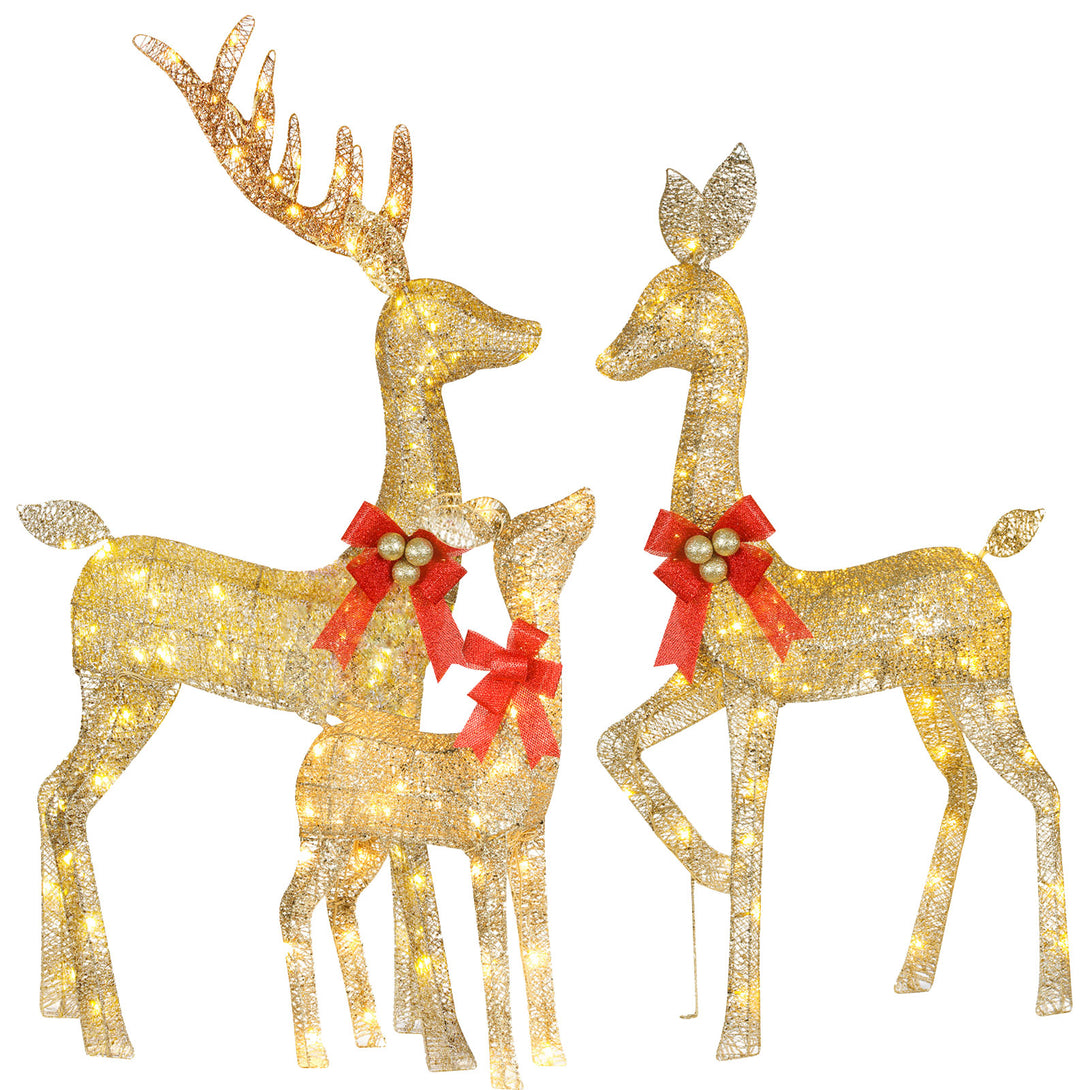
Every reindeer figure presents a real visible direction. Some show a strong side profile. Others turn the head toward the viewer or place the body and head on different lines. Treat that posture as a fixed visual input unless the product's own verified instructions say otherwise.
From the street-side frame, compare two things: where the body seems to travel and where the head draws attention. When those directions are easy to read, the display gains a visual cue beyond its outline. When they disappear behind another figure or merge with the house, the group becomes harder to interpret.
Rotate or reposition the complete figure only within the setup choices genuinely available to you. Do not force a side-profile lesson onto a front-facing product, and do not assume the head, legs, or body can be adjusted. The best street view is the one that makes the product's existing pose easier to understand.
Remove Shapes That Compete With the Reindeer
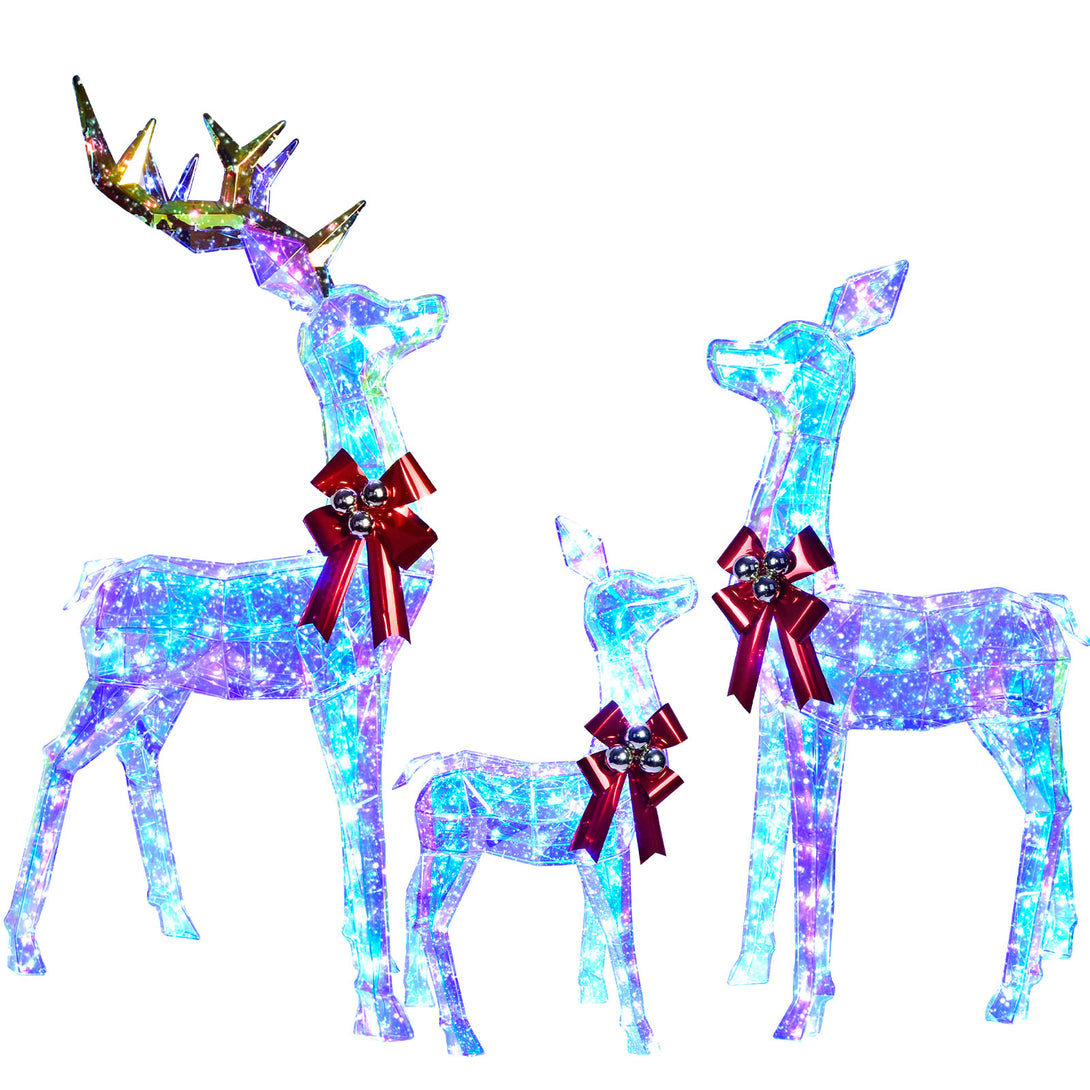
A display can be recognizable on its own and still lose attention when another large shape sits beside it. Look for nearby decorations, dense light clusters, oversized bows, strong window outlines, or landscaping masses that carry similar visual weight.
Remove or visually separate one competitor before adding anything new. Then return to the same street-side frame. If the reindeer becomes easier to identify, the problem was competition, not a lack of decoration.
Keep the diagnosis narrow. You are not redesigning the entire yard or choosing a complete color scheme. You are protecting the reindeer as the subject of this particular view. If the rest of the property needs a broader plan, use HOYECHI's one-weekend front-yard Christmas decorating guide after this focal-point check is complete.
Check the Same Composition in Daylight and After Dark
Daylight and after-dark views can emphasize different parts of the same arrangement. In daylight, you may notice the physical outline, surface color, landscaping, and architectural lines. After dark, some background details may recede while illuminated edges and nearby decorations become more prominent.
Return to the exact same viewing frame in both conditions. Do not compare a close daylight photo with a wider nighttime photo. The purpose is to see whether the same outline survives when the background changes visually.
During the daylight check, look for:
- body edges that merge with shrubs, posts, trunks, or window frames;
- legs or antlers that become extensions of background lines;
- nearby shapes that appear larger or more detailed than the reindeer.
During the after-dark check, look for:
- two figures that collapse into one combined outline;
- a nearby decoration that becomes the first recognizable subject;
- parts of the reindeer that no longer connect into a readable whole.
This is a composition comparison, not a product-performance test. It does not establish a guaranteed viewing range.
Run a Quick Long-View Photo Test
Take one photo from the fixed viewing frame after each meaningful change. Keep the reindeer, house edges, and nearby major decorations in the same crop. Label the photos in order so you can compare the original composition with the adjusted one.
Review each image at the size it first appears on your phone instead of zooming into details. Give yourself two questions and answer them quickly:
- What is the first recognizable subject?
- Where does the reindeer outline stop being clear?
If the answer improves after a single adjustment, keep that change. If it does not, undo it before trying another. Moving several figures and background elements at once makes it difficult to learn which visual collision mattered.
Stop when the reindeer reads promptly and its key outline no longer merges with the strongest surrounding shapes. You do not need to fill every empty area or make the display dominate every possible angle.
Keep This Street-View Check Separate From Other Decisions
Street-side readability is only one design task. Keeping it separate prevents this guide from turning into several different articles at once.
- If you are still choosing between one figure and a larger set, use the one-reindeer vs. reindeer-family guide.
- If you already have a buck, doe, and fawn and need to arrange their internal relationship, use the three-piece reindeer placement guide.
- If your display combines a reindeer and sleigh and you want to shape its narrative direction, use the reindeer-and-sleigh display guide.
This article begins after those product and story choices. Its only test is whether the subject remains visually understandable from the real street-side frame.
Frequently Asked Questions
How can I tell if my reindeer display reads clearly from the street?
Choose one normal street-side viewing frame and give yourself a brief recognition check. If the reindeer is the first clear subject and its main outline does not merge with the house, landscaping, or nearby decorations, the composition is doing its job.
Should an outdoor reindeer face the street or show a side profile?
Neither option is universally correct. Use the figure's real posture and choose the angle that makes its head and body easiest to interpret from your main view. Do not assume any part can be repositioned.
What background makes a reindeer silhouette easier to recognize?
A visually quiet background usually makes the outer edge easier to follow. Look for a view where rooflines, window frames, porch posts, trunks, shrubs, and other decorations do not cut through the most important parts of the reindeer.
Why do several reindeer look like one shape from farther away?
Their heads, bodies, or legs may occupy the same line of sight. Check the group from the fixed street-side frame and change one whole-figure angle or front-to-back relationship at a time until the main outlines separate.
Should I check the display in daylight and after dark?
Yes. The background and visible edges may read differently in the two conditions. Use the same viewing frame and crop for both checks so you are comparing composition rather than making a product-performance or range claim.
Browse HOYECHI Christmas Reindeer
A street-readable reindeer display starts with one honest viewing frame. Reduce the scene to its largest shapes, separate the outline from the background, work with the figure's real facing direction, and remove one competing shape at a time. Recheck the same crop in daylight and after dark. When you are ready to consider a silhouette for your own space, browse HOYECHI Christmas Reindeer and judge current product photos by the view you actually need.


