


For a neighborhood lights night, outdoor Christmas reindeer decorations work best when the deer form a complete scene before anyone arrives. Choose the figures you want people to notice, finish the display, and try the intended view after dark. Then share a simple viewing window. The aim is a welcoming moment outside one home—not an entire street's light show.
David's guiding idea is simple: “Christmas yard decorations are for welcoming neighbors and sharing a gentle evening—not competing to have more or grander decorations.” A few deer can create a reason to stop, say hello and talk. The household should be able to enjoy that moment, too.
Let the light support the deer, not overwhelm them
David describes the effect he aims for in covered deer designs: a soft, even impression from thread, imitation-rattan or other linear coverings, rather than a collection of glaring points. His principle is that the light should support the shape, not overpower it. From a distance, viewers should still recognize a deer.
He particularly values the transition through dusk, when the covering and body still have visible depth and the lit outline becomes more prominent as daylight fades. That balance informs his thinking about LED placement. It is a design observation about changing ambient light, not an automatic brightening function.
Give the deer a role in the evening
Decide what you want someone to remember: a pair of deer greeting them, a reindeer beside Santa's sleigh, or a family of different poses. That choice gives the evening a subject. It also helps you resist adding unrelated decorations just because there is space left.
Start with the deer you already own. If they make the scene you want, preparing the display is more useful than buying more. If you are still choosing its visual theme, our three outdoor reindeer display styles explore that separate decision. Here, the next step is turning your chosen scene into an evening people can enjoy.
Choose a configuration that supports your idea
These HOYECHI catalogue photos illustrate different subjects for a display; they are not photographs of a neighborhood gathering. Compare the actual dimensions, included items and current availability on each product page before planning around a new purchase.
A doe and fawn for a simple greeting
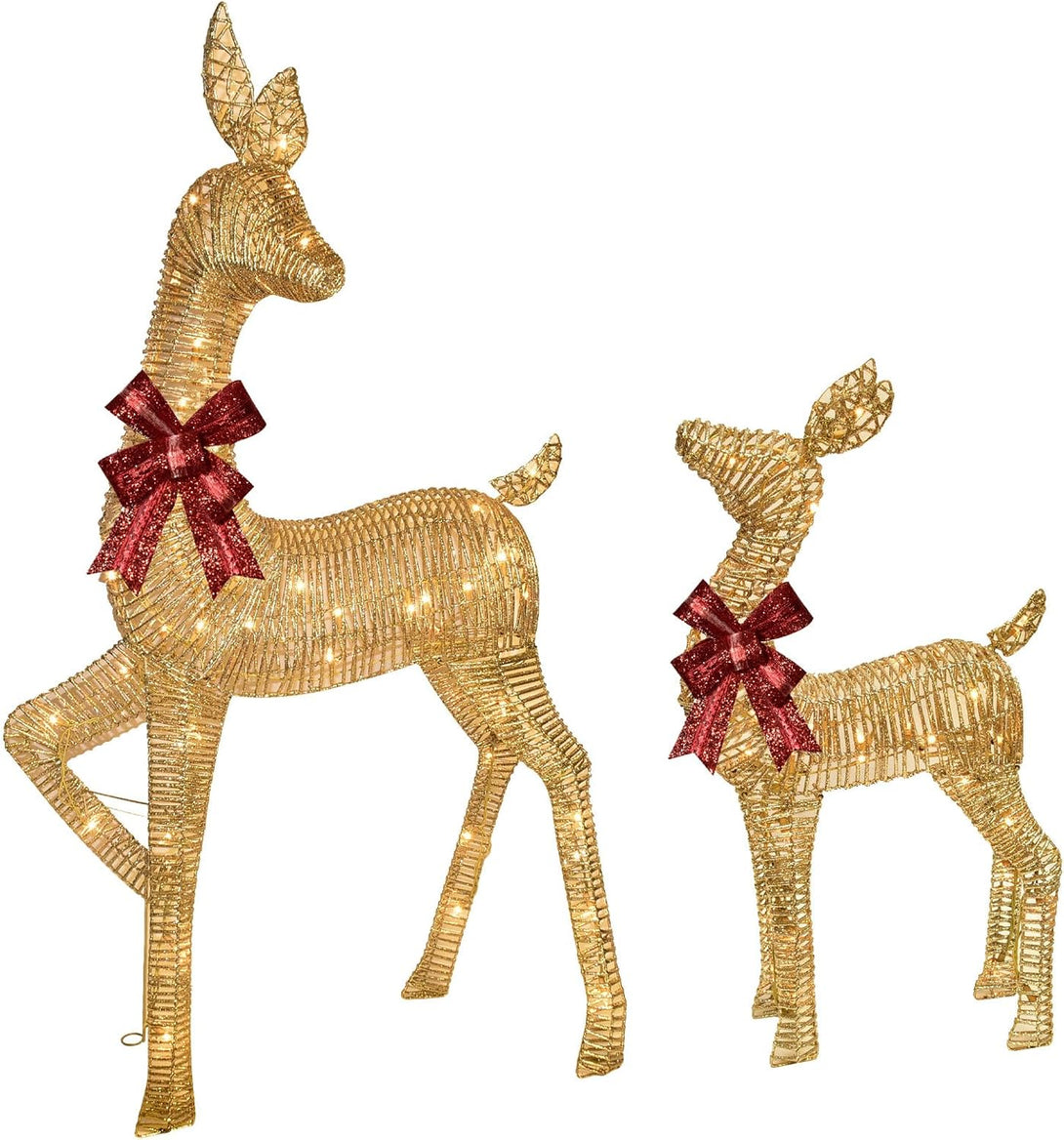
The two-piece lighted doe-and-fawn set offers an immediately recognizable relationship. It suits an idea built around one shared moment: “Come see the deer by our house.” Choose a pair when that is the whole scene you want, rather than treating it as an unfinished larger display. Check the dimensions; fewer figures do not automatically mean a small footprint.
A reindeer and sleigh for a familiar Christmas story

The white reindeer with a red decorative sleigh gives viewers a familiar story to recognize. David suggests this scene description: “Gentle reindeer resting beside Santa’s empty sleigh, ready for the night journey.” It is storytelling for a static decoration. Plan the experience around looking, not climbing into the sleigh or adding passengers.
A deer family for a longer look

The four-piece gold reindeer family offers several poses to discover. David likes a lowered head for inviting a child's imagination: is the little deer sniffing the grass? Choose a group when those different poses are part of your idea and the complete set fits your space—not because a special evening requires more figures.
For a three-deer group you already own, David suggests trying one deer slightly forward and two farther back or to the side, with breathing room between them. Small changes in position can tell the story without extra lights or another purchase.
Prepare the display before promising the evening
Work backward from when you would like the deer to be ready. Leave the actual preparation time flexible: an existing set and a newly delivered set are different starting points. Confirm that the figures, required parts and product instructions are available before settling on the viewing date.
| Stage | What should be ready? |
|---|---|
| Before choosing the evening | The deer configuration and viewing place are decided; any required order has arrived and been checked. |
| Before the first lights-on check | Assembly and setup are complete according to the product instructions; unresolved power or fixing questions have been addressed. |
| Before inviting friends | The household has seen the finished deer after dark and agreed on a practical viewing window. |
| Before visitors arrive | The intended viewing area remains clear, and someone knows when to finish the evening. |
If setup is not ready, move the viewing date instead of rushing a last-minute workaround. Use the manufacturer's instructions for the specific set, including its location and weather limitations. This preparation sheet is not an installation guide.
Make the first lights-on check a family preview
David recommends allowing two or three evenings for short observations before deciding the display needs more. Operate the set only within its instructions; this does not mean leaving it on all night. Notice its appearance at different light levels, any leaning or shifting, and whether the layout or cable route obstructs where people need to pass. These observations do not certify wind stability or electrical safety. Stop using a set that shows a problem and contact support.
When family opinions differ, use the ordinary viewer's position as shared ground. Can you see a complete deer outline? Does the group look comfortably balanced, with its main shapes clear of shrubs? Have one person look from that position while another checks the display, then ask: “What do you notice first?”
For help with a deer outline disappearing against its background, use our street-view reindeer display guide. Keep this preview focused on the finished evening: can people enjoy the scene without stepping among the figures, and does the experience match what you plan to invite them to see?
Make dusk a family observation moment. Children can name a deer, choose a pose or imagine where the deer are going, without touching the decorations. Adults handle setup and electrical questions. A short “find the grazing deer” prompt makes the scene engaging without adding another object to the lawn.
Keep the invitation as simple as the display
A short message is enough: “Our reindeer lights will be on this Saturday from [start] to [finish]. Enjoy the view from [viewing place]; the decoration area isn't open for walking through. We'll message you if plans change.” Choose the time and viewing place for your home; these placeholders are not a recommended schedule.
Clear expectations help visitors respect the display and nearby homes. Holly's Tacky Christmas Lights viewing tips, from a local light-display directory, likewise remind viewers to check hours, stay out of display areas and respect neighbors' driveways. If conditions change, a brief cancellation or new-date message is enough.
Finish with a scene you want to enjoy again
End at the time you shared and follow the set's operating instructions. Afterwards, keep one useful note about what people noticed or what you would simplify. David suggests saving a wide view at a passerby's eye level during blue-hour dusk. It can record the deer, surrounding space and overall arrangement together—a reference for next year's layout.
If you still need the figures for your idea, browse HOYECHI outdoor Christmas reindeer decorations and compare complete configurations. Choose what makes your scene feel finished—not what fills every remaining patch of grass.
Quick questions
Do I need a large deer family for a neighborhood lights night?
No. A pair or an existing display can be enough. Base the choice on the scene you want people to recognize and the space available, not an assumed minimum number of deer.
Should I announce the date before the decorations arrive?
For a new set, wait until it has arrived, been checked and been set up before making a firm invitation. That leaves room to resolve missing parts or other questions without rushing the evening.


